How to Tell Time in Hebrew
From "Ma hasha'a?" to "reva le-shmone": everything you need to understand the answer when you ask an Israeli what time it is.
 By Guy & ItzikNative Hebrew teachers from Israel
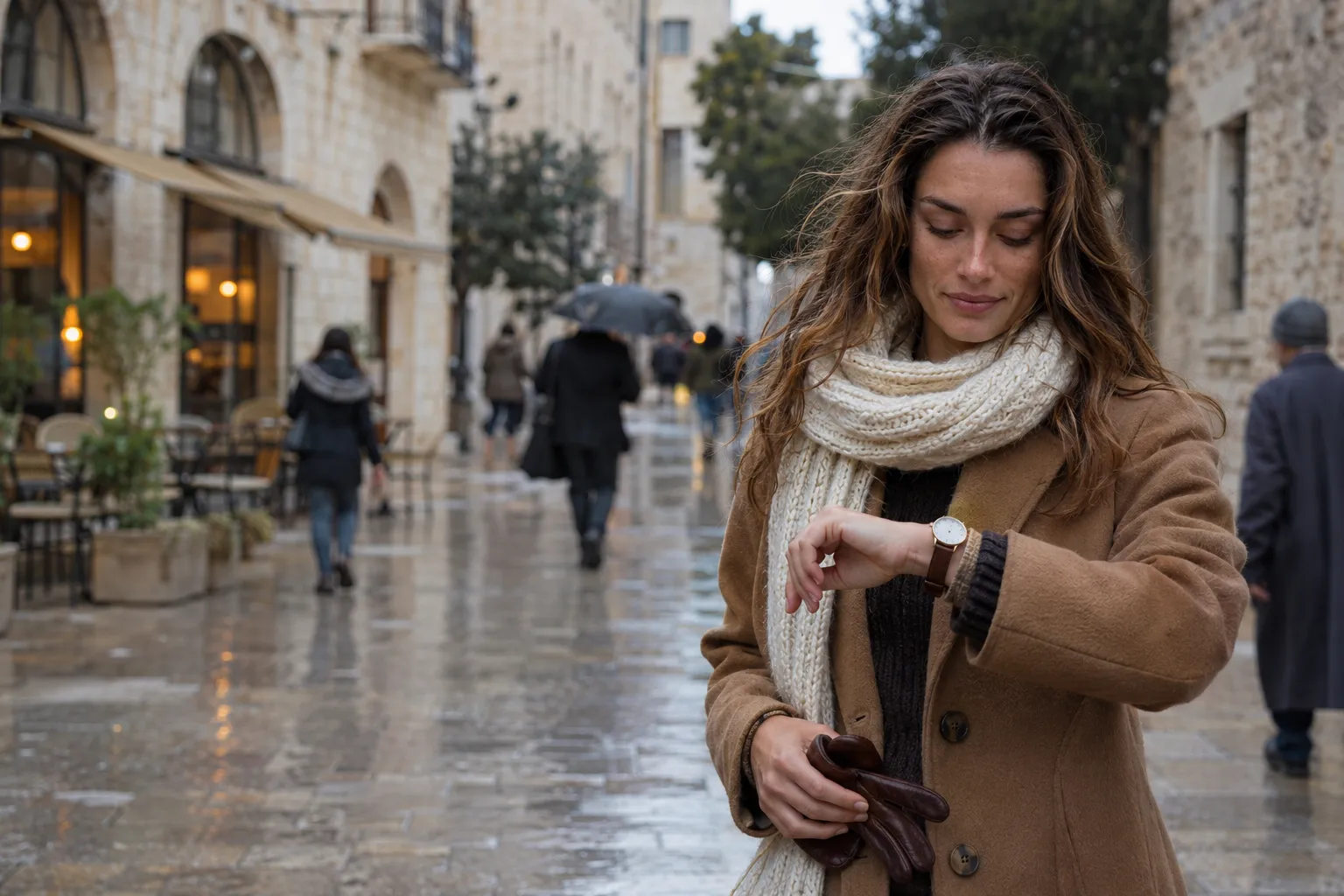
You are walking down a street in Tel Aviv. Somebody told you about a falafel stand that closes early, so you stop a passer-by and ask מָה הַשָּׁעָה? (ma hasha'a?), "What time is it?". The answer comes back fast, and in Hebrew.
By the end of this guide you will understand that answer and make it to the falafel on time. You only need the numbers 1 to 12, six little words and two simple patterns. And if you want to check yourself, the clock below says the current time in Hebrew, with vowel signs, and updates every second.
What time is it in Hebrew?
Live from your device's clock. Drag the long hand, or pick a time, to hear how Israelis would say it.
How to ask the time in Hebrew
The question is short. שָׁעָה (sha'a) means both "hour" and "time of day", so you literally ask "What is the hour?":
The answer can start with הַשָּׁעָה (hasha'a, "the time is"), but most people just say the time: שֵׁשׁ וָחֵצִי (shesh va-chetzi), "half past six". To ask when something happens, use בְּאֵיזוֹ שָׁעָה? (be-eyzo sha'a?), "at what time?", and answer with בְּ (be-) in front of the hour: בְּחָמֵשׁ (be-chamesh), "at five".
The hours: count from 1 to 12
Hebrew numbers come in a masculine and a feminine form. שָׁעָה is a feminine word, so the hours always use the feminine numbers. These are also the numbers Israelis use when they simply count, so you may already know a few.
| Time | English | Say it | Hebrew |
|---|---|---|---|
| 1:00 | one | achat | אַחַת |
| 2:00 | two | shtayim | שְׁתַּיִם |
| 3:00 | three | shalosh | שָׁלֹשׁ |
| 4:00 | four | arba | אַרְבַּע |
| 5:00 | five | chamesh | חָמֵשׁ |
| 6:00 | six | shesh | שֵׁשׁ |
| 7:00 | seven | sheva | שֶׁבַע |
| 8:00 | eight | shmone | שְׁמוֹנֶה |
| 9:00 | nine | tesha | תֵּשַׁע |
| 10:00 | ten | eser | עֶשֶׂר |
| 11:00 | eleven | achat-esre | אַחַת עֶשְׂרֵה |
| 12:00 | twelve | shteym-esre | שְׁתֵּים עֶשְׂרֵה |
On the hour, you just say the number. To be precise, add בְּדִיּוּק (bediyuk, "exactly"): שֶׁבַע בְּדִיּוּק, "seven o'clock sharp". Want every number, not just 1 to 12? Our guide to counting in Hebrew has a converter for any number.
Six words for reading a clock
| hour, time | sha'a | שָׁעָה |
| hours | sha'ot | שָׁעוֹת |
| minute | daka | דַּקָּה |
| minutes | dakot | דַּקּוֹת |
| quarter | reva | רֶבַע |
| half | chetzi | חֵצִי |
Two more you will hear: שָׁעוֹן (sha'on) is a clock or a watch, and חֲצוֹת (chatzot) is midnight.
Minutes past the hour: "and"
For the first half of the hour, Hebrew works like English "past", but with the word "and". In Hebrew "and" is a single letter, ו (vav, pronounced ve-), glued to the next word, and its sound changes a little with that word (ve, va or u). Don't worry about the rule: learn these six as set phrases. Here they are at eight o'clock:
| Time | English | Say it | Hebrew |
|---|---|---|---|
| 8:05 | five past eight | shmone va-chamisha | שְׁמוֹנֶה וַחֲמִשָּׁה |
| 8:10 | ten past eight | shmone va-asara | שְׁמוֹנֶה וַעֲשָׂרָה |
| 8:15 | quarter past eight | shmone va-reva | שְׁמוֹנֶה וָרֶבַע |
| 8:20 | twenty past eight | shmone ve-esrim | שְׁמוֹנֶה וְעֶשְׂרִים |
| 8:25 | twenty-five past eight | shmone esrim va-chamisha | שְׁמוֹנֶה עֶשְׂרִים וַחֲמִשָּׁה |
| 8:30 | half past eight | shmone va-chetzi | שְׁמוֹנֶה וָחֵצִי |
Why "chamisha" and not "chamesh"? For the minutes, everyday speech uses the masculine numbers חֲמִשָּׁה (chamisha) and עֲשָׂרָה (asara), even though the hour itself is feminine. It is simply how Israelis say it, so copy it as is.
Minutes to the hour: two correct ways
After half past, you can choose. Either keep counting up from the hour, like reading a digital clock, or count down to the next hour with לְ (le-, "to"). Both are correct and you will hear both every day in Israel.
| Time | English | Say it | Hebrew |
|---|---|---|---|
| 8:35 | twenty-five to nine | esrim va-chamisha le-tesha | עֶשְׂרִים וַחֲמִשָּׁה לְתֵשַׁע |
| 8:40 | twenty to nine | esrim le-tesha | עֶשְׂרִים לְתֵשַׁע |
| 8:45 | quarter to nine | reva le-tesha | רֶבַע לְתֵשַׁע |
| 8:50 | ten to nine | asara le-tesha | עֲשָׂרָה לְתֵשַׁע |
| 8:55 | five to nine | chamisha le-tesha | חֲמִשָּׁה לְתֵשַׁע |
| Time | English | Say it | Hebrew |
|---|---|---|---|
| 8:35 | eight thirty-five | shmone shloshim va-chamisha | שְׁמוֹנֶה שְׁלֹשִׁים וַחֲמִשָּׁה |
| 8:40 | eight forty | shmone arba'im | שְׁמוֹנֶה אַרְבָּעִים |
| 8:45 | eight forty-five | shmone arba'im va-chamisha | שְׁמוֹנֶה אַרְבָּעִים וַחֲמִשָּׁה |
| 8:50 | eight fifty | shmone chamishim | שְׁמוֹנֶה חֲמִשִּׁים |
| 8:55 | eight fifty-five | shmone chamishim va-chamisha | שְׁמוֹנֶה חֲמִשִּׁים וַחֲמִשָּׁה |
Notice that לְ also changes its sound before some numbers: לִשְׁתַּיִם (li-shtayim), "to two", and לִשְׁמוֹנֶה (li-shmone), "to eight". The live clock above always uses the right form.
 Hebrew For Beginners
Learn to speak, read and write Hebrew from scratch with two native Hebrew teachers.
See the course →Minutes in between
When the long hand is not on a five, say the hour, then "and", then the minutes, and finish with דַּקּוֹת (dakot):
With one minute, say וְדַקָּה (ve-daka), "and a minute". In casual speech many Israelis drop the "and" and the word for minutes and just read the digits: שֶׁבַע אַרְבָּעִים וְשֶׁבַע.
Morning, afternoon and night
When people speak, they use the 12-hour clock and add the part of the day when it is not obvious. Timetables, tickets and phones in Israel show the 24-hour clock, but even then people say שְׁמוֹנֶה בָּעֶרֶב, "eight in the evening", rather than "twenty".
| in the morning | ba-boker | בַּבֹּקֶר |
| at noon (12:00 to about 15:00) | ba-tzohorayim | בַּצָּהֳרַיִם |
| in the afternoon | achar ha-tzohorayim | אַחַר הַצָּהֳרַיִם |
| in the evening | ba-erev | בָּעֶרֶב |
| at night | ba-layla | בַּלַּיְלָה |
Test yourself
Say each time out loud, then open it to check. In the live clock above, the Quiz me button gives you as many more as you like.
6:30
שֵׁשׁ וָחֵצִי (shesh va-chetzi)
4:50
עֲשָׂרָה לְחָמֵשׁ (asara le-chamesh), or אַרְבַּע חֲמִשִּׁים (arba chamishim)
9:20
תֵּשַׁע וְעֶשְׂרִים (tesha ve-esrim)
1:45 in the afternoon
רֶבַע לִשְׁתַּיִם בַּצָּהֳרַיִם (reva li-shtayim ba-tzohorayim)
Telling the time is the perfect daily drill: every time you look at your phone, say the time in Hebrew. Then practice the words around it with the Hebrew calendar and the 100 most common Hebrew words.

Unlimited vocabulary quizzes with professional human narration for every word. Practice with friends and choose whether the vowel signs show.


Questions about telling time in Hebrew
How do you say "What time is it?" in Hebrew?
מָה הַשָּׁעָה? (ma hasha'a?). It literally means "What is the hour?".
Do Israelis use the 12-hour or 24-hour clock?
Both. Written times (schedules, tickets, phones) use the 24-hour clock. In speech people use the 12-hour clock and add "in the morning" or "in the evening" when needed.
Why are the hours feminine?
Because the word for hour, שָׁעָה, is feminine. So it is שָׁלֹשׁ (shalosh) for three o'clock, not the masculine שְׁלֹשָׁה (shlosha).
How do you say "quarter to" and "half past" in Hebrew?
Quarter to is רֶבַע לְ (reva le-) plus the next hour, and half past is the hour plus וָחֵצִי (va-chetzi).
Native Hebrew teachers from Israel and the creators of Hebrew For Beginners. Since 2012 we have taught Hebrew to over 40,000 students on Udemy, and we built the Hebrew Quiz and Hebrew Alphabet Journey apps.